A new scientific paper related to the SynergyFuels project has been published in the journal Fuel. The study entitled„Influence of reforming temperature on the production of hydrogen-rich syngas by staged gasification“, performed by researchers from Fraunhofer UMSICHT and the Technical University of Munich, investigates how reforming temperature affects syngas composition and yield in the EXO process.
The Enhanced Carbon-To-X-Output process (EXO) developed at Fraunhofer UMSICHT combines intermediate pyrolysis, fixed-bed counter-current gasification, and downstream catalytic reforming using activated carbon. This staged configuration enables the conversion of ash-rich and technically challenging biogenic residues. In the experimental campaign, pelletized sieve overflow from biowaste processing was used as feedstock. The reforming temperature was increased stepwise from 500 to 900 °C, while the pyrolysis and gasification conditions remained constant.
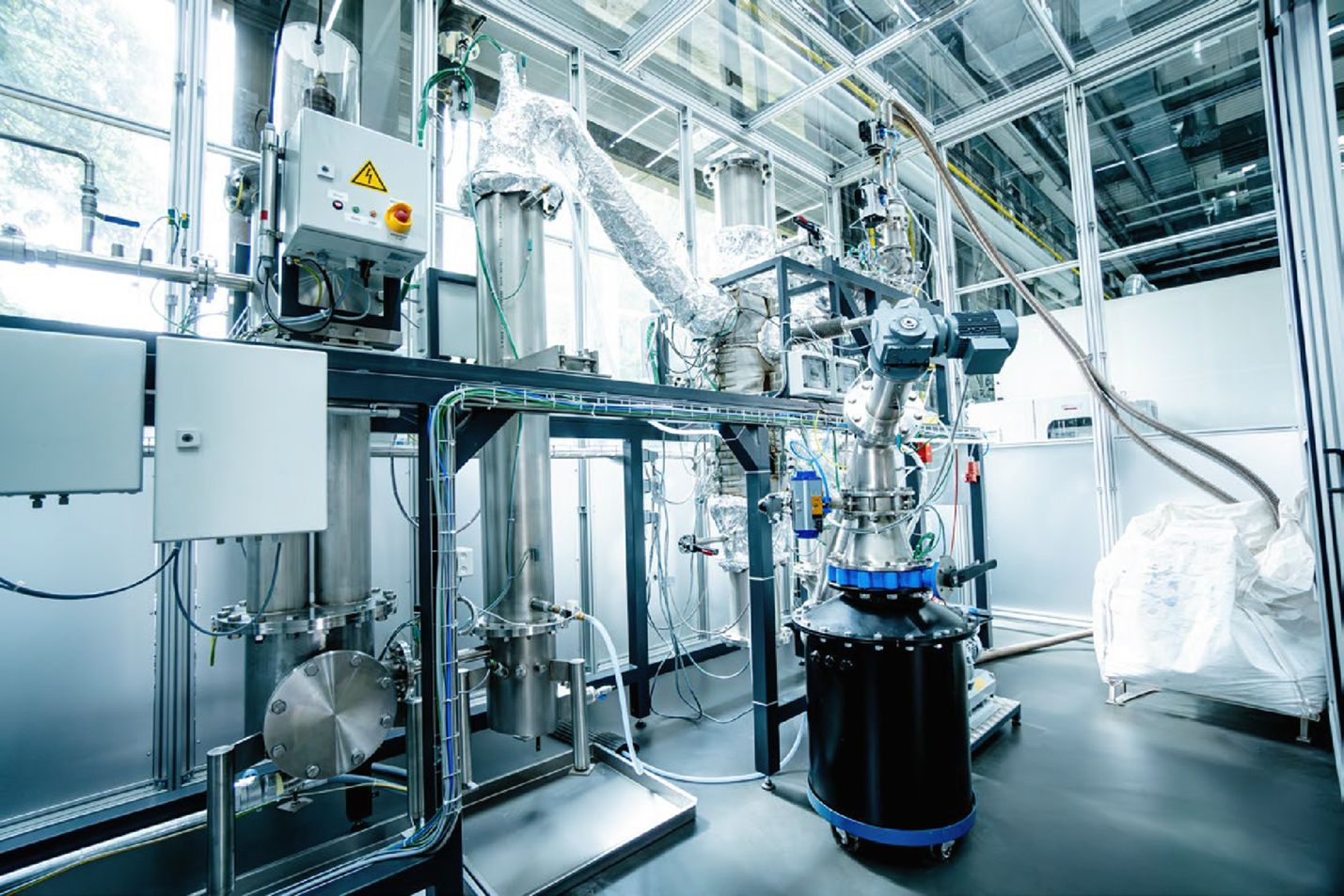
The results demonstrate a strong influence of reforming temperature on product-gas quality. As the temperature increased, the hydrogen concentration in the syngas rose from 26.3 to 36.7 vol%. At the same time, the hydrogen yield increased from 24.72 to 41.23 g H₂ per kg of feedstock, while the syngas yield rose from 0.98 to 1.20 Nm³ per kg of feedstock. The cold gas efficiency also improved substantially, increasing from 37.7 to 79.3%. Within the investigated temperature range, the highest hydrogen yield was obtained at a reforming temperature of 900 °C.
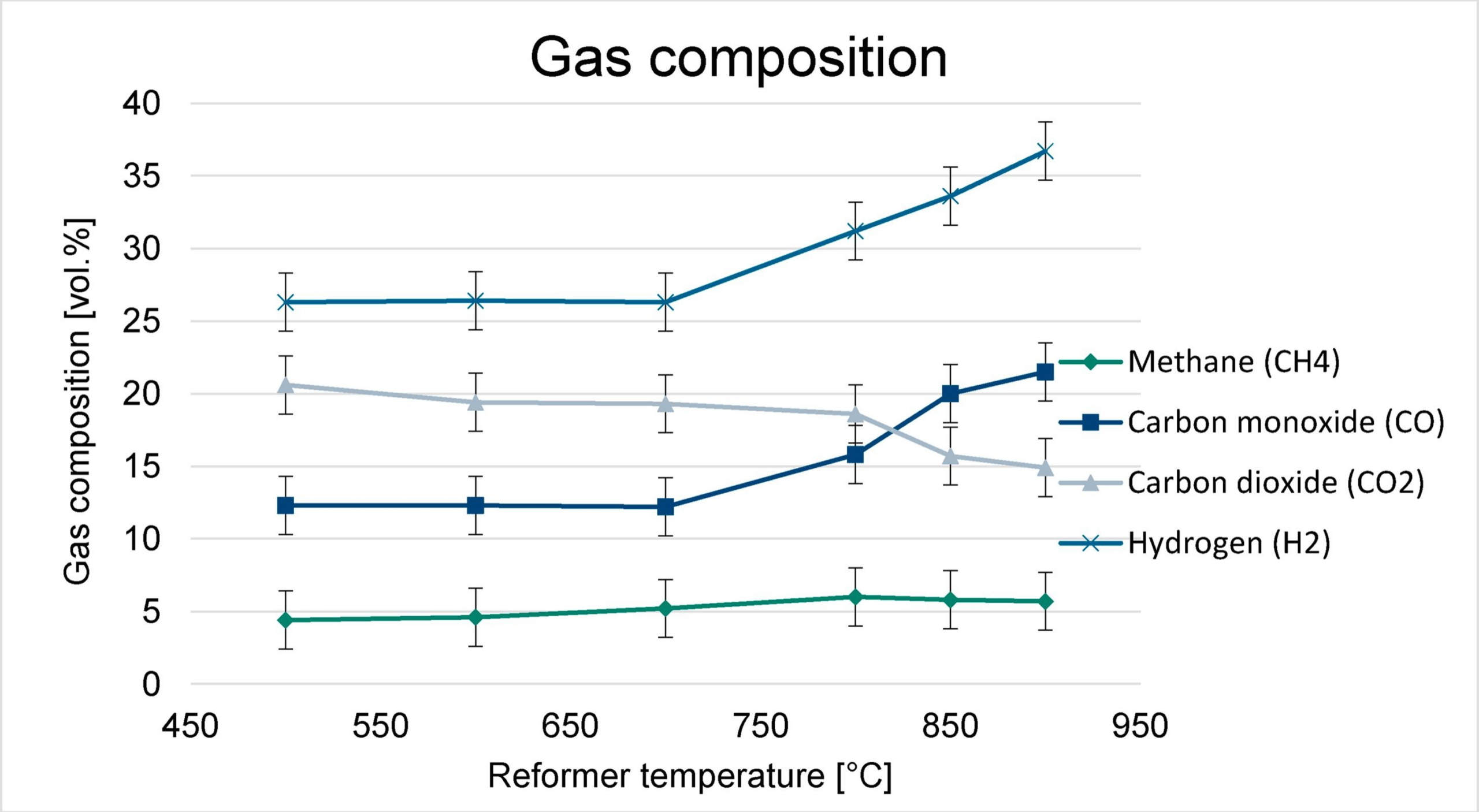
The study highlights the potential of staged gasification for converting ash-rich biogenic residues into hydrogen-rich syngas. This syngas can serve as an intermediate for subsequent chemical syntheses and sustainable fuel pathways. Future work will focus in particular on the influence of gas residence time in the reformer and on the long-term stability of the activated carbon used in the process.
The open-access article is available here.